Zero-Defect Automation for Optically Critical Healthcare Parts
High-volume healthcare production requires automation solutions that deliver zero-defect quality, efficiency, and reliability. Especially when handling optically critical components, manufacturers must balance precision, inspection accuracy, and throughput – often within strict cleanroom and space constraints. This case study highlights how these challenges can be successfully addressed through intelligent system design.
#MedTech #PharmaceuticalDevices #HealthcareAutomation
- Precision handling of optical critical parts
- 100% inline inspection with minimal scrap
- Smallest footprint for cleanroom production
Challenge
The challenge was to develop an automated solution capable of gentle, high-speed handling of optically sensitive transparent parts, ensuring zero contact damage while maintaining repeatability at high cycle rates. It also required reliable 100% inline inspection to detect cosmetic and functional defects in transparent polymers, minimizing both false rejects and true scrap to improve yield and OEE. All of this had to fit within a compact cleanroom footprint without compromising mold access, maintainability, or operator ergonomics, while ensuring high autonomy and fast ROI.
Developing a Solution
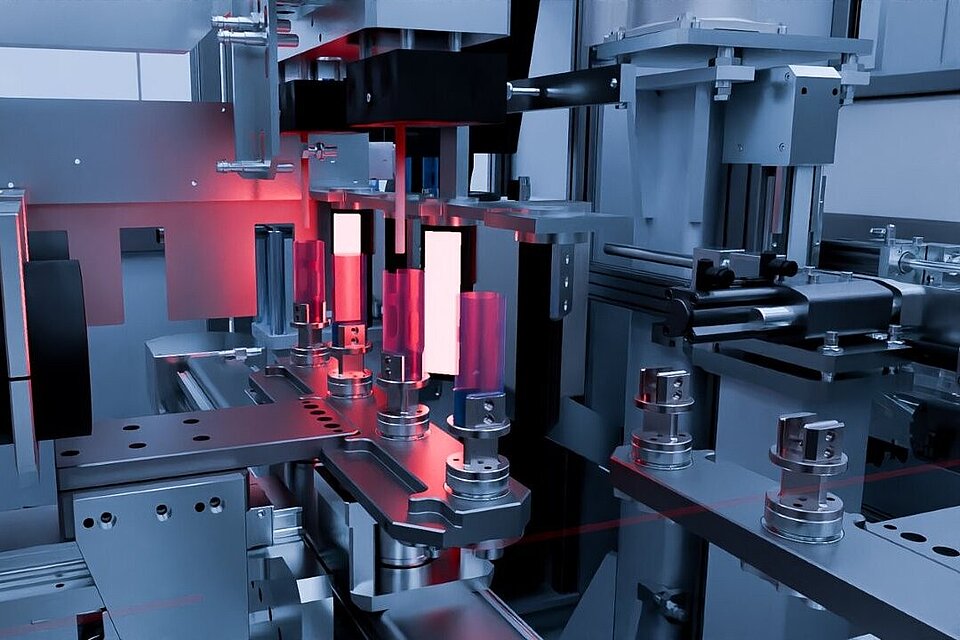
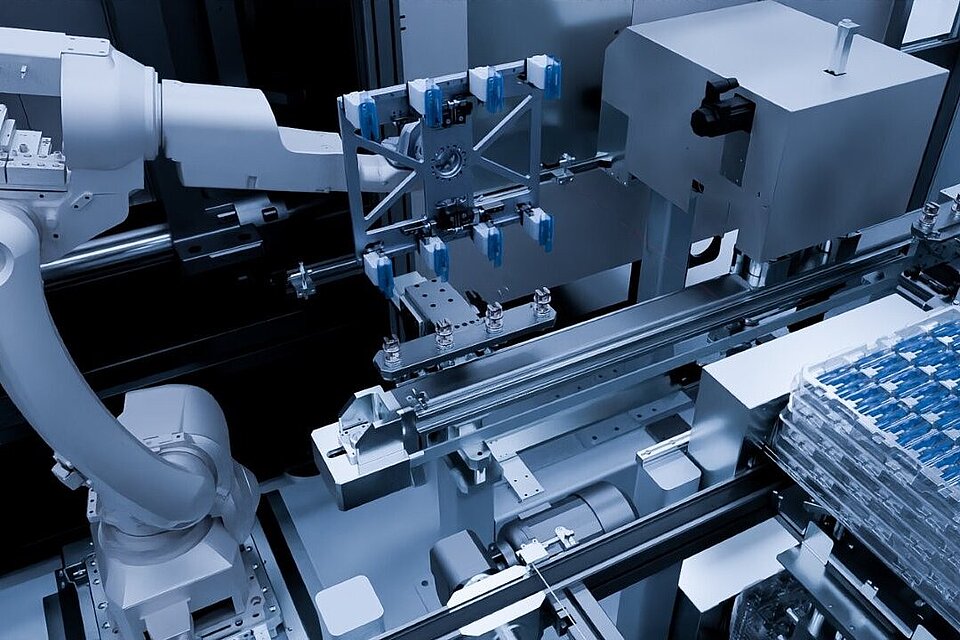
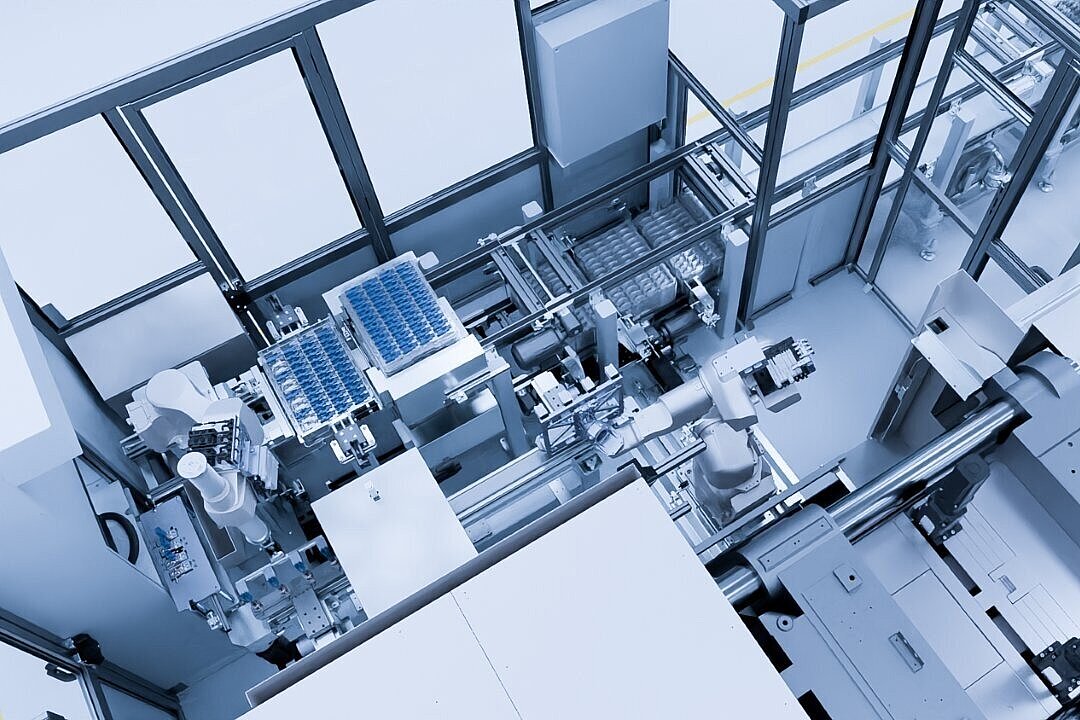
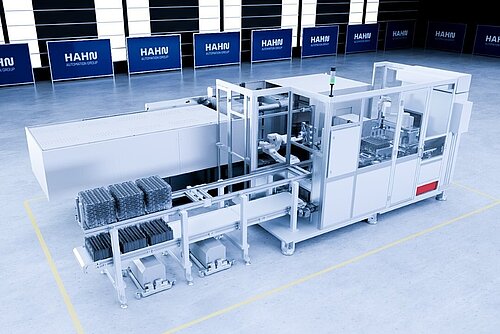
We developed an integrated automation solution combining precise handling, 360° inspection, compact layout, as well as high autonomy. The core is a gripping concept with control functions built into the robot arm for repeatable motion, while FDA-certified end-of-arm tooling handles transparent, optically critical parts gently yet rigidly at high cycle rates. For vision inspection we partnered with a specialist to select the optimal camera, lighting, and part presentation setup to minimize false rejects. The 6-axis handling unit operates close to the mold to reduce footprint, but can be removed for maintenance work. Special maintenance positions allow quick access without losing precision. A smart reject system automatically replaces defective parts with good ones, keeping trays populated and maximizing autonomy without outreaching the length of the injection molding machine.