Automated Assembly in Medical Technology
What is Automated Assembly in Medical Technology?
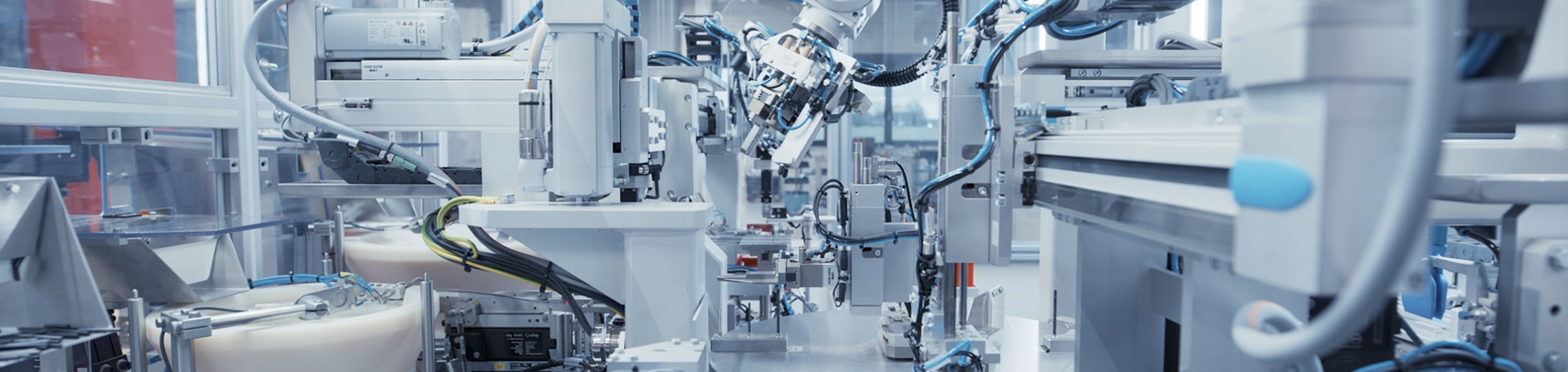
Automated assembly in medical technology refers to the use of specialized equipment to ensure the precise, reproducible, and validated manufacturing of medical products. The goal is to combine the highest quality standards with regulatory compliance and production efficiency.
Unlike other industries, MedTech places a strong focus on traceability, process validation, and cleanroom compatibility.

When Does Automation Make Sense in MedTech Production?
Automation is particularly beneficial when:
- High production volumes with consistent quality are required
- Manual processes reach their limits (e.g., error rates, speed)
- Regulatory requirements demand complete documentation
- Products involve complex assembly or testing processes
A typical trigger is the transition from manual assembly to scaled serial production.
Which Regulatory Requirements Must be Considered?
Regulatory requirements play a central role in MedTech automation. Key frameworks include:
- FDA regulations (e.g., 21 CFR Part 820 and 21 CFR Part 11)
- MDR (Medical Device Regulation in the EU)
- GMP (Good Manufacturing Practice)
- GAMP 5 (Good Automated Manufacturing Practice)
- ISO 13485 (Quality Management System for Medical Devices)
These regulations significantly influence system design, especially regarding:
- Documentation (e.g., audit trails and complete traceability)
- Software validation (including CSV – Computer System Validation)
- Process reliability
- Risk management

What does a typical automation project look like?
An automation project in the medtech sector typically follows clearly defined phases. It is particularly critical to incorporate validation requirements early on, as these must be taken into account as early as the design phase (DQ) to avoid the need for later adjustments.
Define technical feasibility, requirements, and identify potential risks early
Create detailed system design and verify compliance with customer and regulatory requirements
Assemble the system and integrate all components into a functional line
Verify that the system is installed, operates, and performs according to requirements
Ramp up to stable, validated serial production
What Challenges Arise in Automated Assembly?
Typical challenges include:
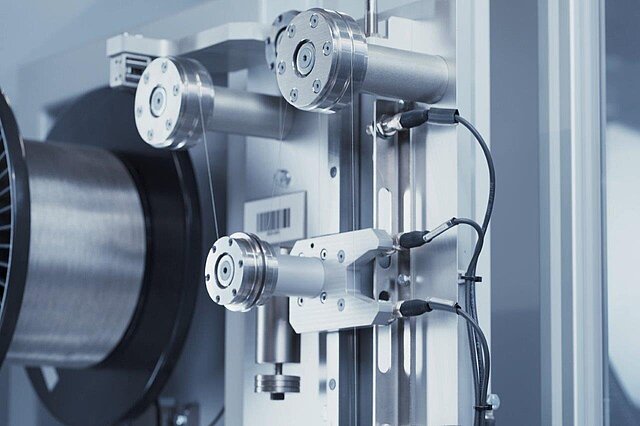
- handling sensitive or very small components
- integrating testing processes into the production line
- ensuring process stability
- meeting clean room requirements
- limited space
- ensuring scalability
These factors often require highly customized automation solutions.
How Does HAHN Automation Group Support MedTech Projects?
The HAHN Automation Group supports MedTech companies throughout the entire project lifecycle – from initial concept to fully validated production systems.
Typical services include:
- Development of custom assembly and testing systems
- System integration (process, mechanical, software, image processing)
- Integration of validation requirements
- Implementation of cleanroom solutions
- Scalable and modular automation concepts
- Digitalization and traceability solutions (e.g., integration with MES systems)
- Validation support (DQ, IQ, OQ)
- Service, maintenance, and lifecycle support
With extensive experience in regulated industries, projects can be implemented efficiently and in full compliance with relevant standards.
Typical Application Examples
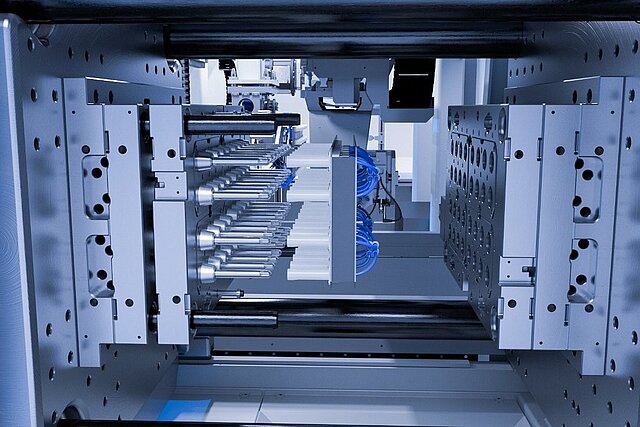
- Assembly of injection systems
- Assembly of diagnostic components
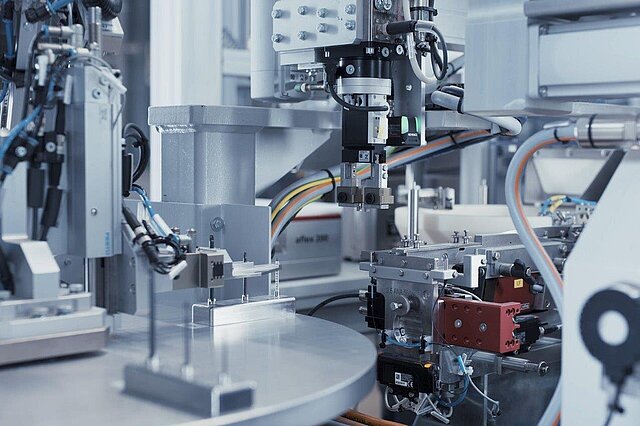
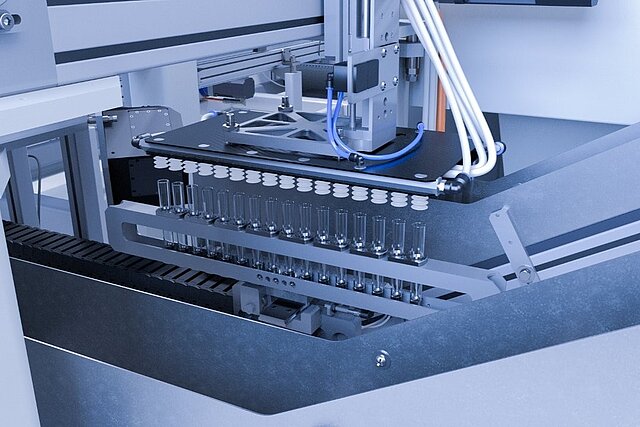
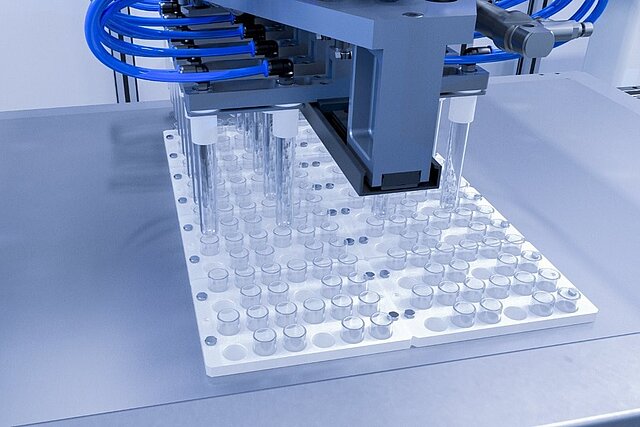
- Automated handling, assembly, testing, and packaging of medical disposables
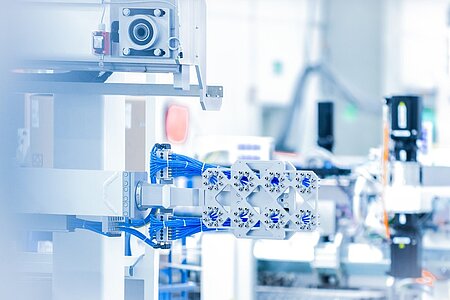
These applications demonstrate how automation ensures quality, efficiency, and compliance simultaneously:
Conclusion: Why Automation is Essential in MedTech
Automated assembly is a key success factor in medical technology. It enables scalable production, reduces errors, and supports compliance with strict regulatory requirements.
Companies that invest in automation early lay the foundation for sustainable growth and long-term competitiveness.
Start Your MedTech Automation Project
Automating medical device production requires deep technical expertise and a clear understanding of regulatory requirements. Whether you are evaluating automation or scaling an existing process, the right approach is critical.
Talk to our experts at HAHN Automation Group to discuss your specific application and identify the best solution for your production.
What You Can Expect:
- Initial assessment of your application and requirements
- Guidance on automation potential and feasibility
- Insights into validation and regulatory considerations
Get in touch with our MedTech Experts today:
Frequently Asked Questions about MedTech Automation
What are the benefits of automated assembly in medical device manufacturing?
Automated assembly improves product quality, reduces human error, and ensures consistent production. It also supports regulatory compliance through better traceability and documentation.
How do you validate automated assembly systems in MedTech?
Automated assembly systems in MedTech are typically validated using the DQ/IQ/OQ/PQ approach. This includes verifying that the system design meets user and regulatory requirements during Design Qualification (DQ), confirming correct installation through Installation Qualification (IQ), ensuring the system operates according to specifications during Operational Qualification (OQ), and proving consistent performance under real production conditions with Performance Qualification (PQ). This structured validation process helps ensure compliance, process reliability, and consistent product quality.
When should a medical device manufacturer invest in automation?
Automation is most valuable when production volumes increase, quality requirements become stricter, or manual processes limit efficiency and scalability. It is often introduced when moving from pilot production to full-scale manufacturing.
What are the main challenges in automating medical device assembly?
Key challenges include handling small or sensitive components, integrating inspection processes, meeting cleanroom requirements, and ensuring stable, validated processes.
How does automation help with regulatory compliance in MedTech?
Automation enables standardized, repeatable processes and detailed data collection, which are essential for meeting regulatory requirements such as FDA or MDR. It also simplifies documentation and audit readiness.
Contact Us
Are you ready to discuss your next project? Let our experts answer any questions you may have. Please use the contact form, and we will get back to you as soon as possible.