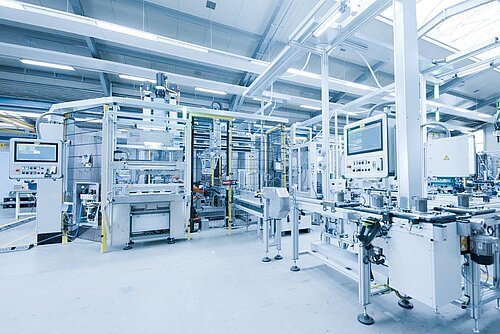
A structured approach to selecting the optimal assembly system based on volume, complexity, and business goals.
Choosing the right level of automation is not just a technical decision—it is a strategic one. Many companies struggle to determine whether manual, semi-automated, or fully automated assembly is the best fit.
Instead of relying on assumptions, a structured decision framework helps evaluate the key factors that define the optimal solution.
What Defines the Right Level of Automation?
The optimal level of automation is determined by the interaction of several key variables:
- Production volume
- Product complexity
- Design stability
- Quality requirements
- Flexibility needs
- Investment and ROI expectations
No single factor is decisive on its own. The right solution results from balancing these criteria.
The Automation Decision Matrix
A proven way to evaluate automation strategies is to assess production volume against product complexity.
- Low volume + high complexity → Manual assembly
- Medium volume + medium complexity → Semi-automated systems
- High volume + low complexity → Fully automated systems
This matrix provides a first indication of the most suitable approach.
When Manual Assembly Is the Better Choice
Manual assembly is often the right decision in the early stages of production.
Typical scenarios include prototyping, small batch production, and environments with high product variability or frequent design changes.
It offers maximum flexibility and allows fast adaptation without high investment.
When Semi-Automation Creates the Most Value
Semi-automated systems are often the most effective solution in real-world production environments.
Typical scenarios include increasing production volumes, complex assembly processes, and the need for improved quality and repeatability.
Semi-automation allows companies to automate critical steps while maintaining flexibility.
See how this approach is implemented in practice in our assembly automation case studies.
In industries with high quality and regulatory requirements, such as medical technology, semi-automation plays a critical role.
When Full Automation Becomes Necessary
Full automation becomes relevant when efficiency and scalability are the primary drivers.
Typical scenarios include high and stable production volumes, standardized products, and long product lifecycles.
It enables maximum output and consistent quality at lower unit costs.
Common Mistakes When Choosing the Level of Automation
Many automation projects fail due to avoidable mistakes.
The most common pitfalls include:
- Over-automation in early stages
- Underestimating product complexity
- Ignoring future flexibility requirements
- Unrealistic ROI expectations
- Lack of scalability planning
Avoiding these mistakes is critical for long-term success.
Why a Scalable Automation Strategy Is Critical
Instead of making a one-time decision, companies should think in terms of evolution.
A typical approach includes:
- Starting with manual or semi-automated processes
- Automating critical process steps
- Expanding towards fully automated systems as demand grows
This approach reduces risk and aligns investment with actual production needs.
Learn more about our assembly solutions and how they support scalable automation strategies.
Conclusion
Choosing the right level of automation requires a systematic evaluation—not intuition.
By combining production data, product characteristics, and business goals, companies can identify the solution that delivers the best balance between flexibility, efficiency, and cost.
Evaluate your optimal level of automation and define a strategy tailored to your production
Get in touch with our experts to discuss your requirements and identify the best solution.
Explore our assembly system solutions or contact our team directly.