Smart meters combine mechanical components, electronic modules, sensors, software, and communication technology within a single product. Manufacturing them therefore requires more than the assembly of individual components. Each production step must ensure that the meter is assembled correctly, configured for its intended application, tested reliably, and prepared for traceable delivery.
The exact manufacturing process depends on whether the product is designed to measure electricity, water, or gas. Product design, production volume, required tests, regional specifications, and the number of variants also influence how the production system is configured.
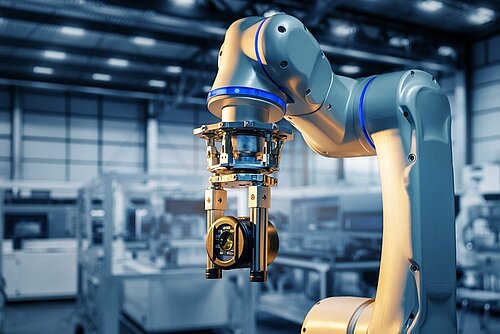
Modern automation concepts bring these processes together within a coordinated manufacturing environment. They can cover everything from manual workstations and semi-automated cells to fully automated production lines. This makes it possible to adapt the level of automation to current production requirements while providing a foundation for future growth.
What Is a Smart Meter?
A smart meter is a measuring device that digitally records consumption data. Depending on its application, it may measure electricity, water, or gas consumption. Unlike conventional meters, smart meters typically contain electronic components and firmware that support advanced measurement, data processing, or communication functions.
Although the individual designs differ, smart meters may include:
- Molded housing components
- Sensors or measurement modules
- Printed circuit boards
- Displays and operating elements
- Electrical contacts and connectors
- Seals and fastening elements
- Product-specific firmware
The combination of these components makes smart-meter manufacturing a multidisciplinary process. Mechanical assembly, electronics handling, software configuration, testing, identification, and packaging must be coordinated within one production concept.
The Smart Meter Manufacturing Process at a Glance
A typical smart-meter production process can include the following stages:
- Component and housing preparation
- Sensor and electronic module assembly
- Firmware flashing
- Housing assembly and variant handling
- Functional and safety testing
- Final quality control
- Serialization and packaging
Not every smart meter passes through exactly the same production sequence. A water meter, for example, may require different functional tests from an electricity meter. The production system must therefore be designed around the specific product, its components, and its quality requirements.
1. Component and Housing Preparation
The process begins with the preparation of housings, electronic components, sensors, seals, connectors, and other product-specific parts. These components can be supplied in trays, containers, reels, or other packaging formats, depending on their geometry and sensitivity.
Before assembly, the components may need to be:
- Identified
- Separated and fed
- Oriented correctly
- Inspected for presence or visible defects
- Assigned to the correct product variant
Housing components are frequently manufactured through injection molding. Depending on the production concept, existing injection-molding equipment can be connected to downstream assembly processes. Hybrid components that combine plastic with metal inserts or other functional elements may also be integrated into the production flow.
Early inspection helps prevent incorrect or damaged components from entering subsequent process stages. Camera systems, sensors, or identification technologies can be used to verify component presence, orientation, and product assignment.
2. Sensor and Electronic Module Assembly
Once the components have been prepared, sensors, printed circuit boards, displays, contacts, and other functional modules are installed.
Because many electronic components are delicate, they must be handled in a controlled and repeatable manner. The required processes depend on the smart-meter design and can include:
- Positioning sensor modules
- Inserting printed circuit boards
- Establishing electrical connections
- Installing displays or operating elements
- Joining mechanical components
- Fastening components by pressing, screwing, or other assembly methods
- Inspecting component presence and position
Process monitoring can be integrated directly into individual assembly stations. For example, force-distance monitoring may be used for pressing processes, while torque and angle monitoring can support controlled screwdriving. Machine vision can verify whether components are present, correctly oriented, and positioned as intended.
The assembly technologies of HAHN Automation Group cover mechanical assembly, precision joining, machine vision, testing, marking, and other processes that can be combined according to the specific product requirements.
3. Firmware Flashing
Smart meters contain electronic control and communication components that require product-specific firmware. Flashing transfers the required software to the electronic module during production.
Depending on the manufacturing concept, firmware flashing can take place before the module is installed, during assembly, or after the meter has been mechanically completed. The appropriate point depends on component accessibility, process sequence, test strategy, and cycle-time requirements.
A controlled flashing process should ensure that:
- The correct firmware is assigned to the product variant
- The electronic module can be reached reliably
- The data transfer is completed successfully
- The flashing result is recorded
- Unsuccessful flashing attempts are identified
Integrating firmware flashing into the production line reduces the need for separate handling steps and helps connect the software configuration with the physical product and its production data.
4. Housing Assembly and Variant Handling
After the internal modules have been installed and configured, the smart-meter housing is assembled. This can include inserting seals, positioning covers, joining housing sections, installing connectors, and securing the final assembly.
The joining technology must match the product design. Depending on the application, housing components may be:
- Screwed together
- Pressed or snapped into place
- Welded
- Bonded
- Sealed using product-specific components
Variant handling is particularly important when several meter configurations are produced on the same system. Variants may differ in their housing, sensor technology, electronic modules, firmware, connections, or market-specific configuration.
The production system must identify the selected variant and provide the correct components, parameters, and processing sequence. Flexible fixtures, adaptable feeding systems, recipe-controlled stations, and automated product identification can support production across multiple configurations.
5. Functional and Safety Testing
Testing is a central part of smart-meter manufacturing. The appropriate test methods depend on the type of meter and its technical requirements.
Possible tests include:
- Flow testing
- Leak testing
- Electrical testing
- High-voltage testing
- Functional testing
- Communication or interface testing
- Assembly verification
- Visual inspection
Flow and leak testing may be relevant for water or gas meters and other products containing fluid-carrying or sealed components. Electrical and high-voltage tests may be required for suitable electrical meter designs. The final test strategy must always be defined according to the individual product and its applicable requirements.
Testing can be performed inline at specific points in the assembly process or at an end-of-line station. Inline testing makes it possible to detect certain assembly errors close to the process in which they occur. End-of-line testing confirms that the completed product meets the defined functional and quality criteria before it leaves production.
The published smart-meter manufacturing case study demonstrates how assembly, firmware flashing, and different testing technologies can be integrated into a modular production concept.
6. Final Quality Control
Before a completed smart meter is released for packaging, it passes through final quality control. This stage verifies that all required assembly, configuration, and testing processes have been completed successfully.
Final quality control may include:
- Visual inspection of the finished product
- Verification of housing assembly
- Confirmation of completed tests
- Inspection of labels and markings
- Comparison of the product with the selected variant
- Verification of the product identification
The production system should also define how non-conforming products are handled. Depending on the cause of the deviation, a product may be sent to a rework station, inspected manually, or removed from the regular production flow.
Clear separation prevents rejected products from being mixed with successfully tested units.
7. Serialization and Packaging
Serialization assigns a unique identity to the finished smart meter. Product identification can be applied through labels, codes, or other marking methods, depending on the product and customer requirements.
Serialization can connect the physical meter with relevant manufacturing information, such as:
- Product type and variant
- Firmware version
- Completed assembly processes
- Test status and results
- Production date or batch
- Packaging assignment
The extent of data collection and traceability depends on the individual manufacturing and quality concept.
After final approval, the smart meters are prepared for shipment. Packaging processes can include label verification, product counting, grouping, insertion into product-specific packaging, and assignment to the correct production or delivery batch.
Choosing the Right Level of Automation
Smart-meter manufacturing does not always require a fully automated production line. The appropriate automation level depends on production volume, product maturity, variant complexity, process stability, investment strategy, and future demand.
Manual Workstations
Manual workstations can be suitable for early production phases, pilot series, low volumes, or processes that require a high degree of operator flexibility. Guided work instructions, identification systems, and integrated tools can support consistent execution.
Semi-Automated Production
Semi-automated systems combine manual loading or assembly with automated process steps such as testing, flashing, joining, or inspection. They can offer a practical balance between flexibility and process control.
Fully Automated Production
Fully automated production lines are generally considered when higher volumes, repeatable processes, short cycle times, or extensive process integration are required. Automated handling connects individual assembly, flashing, testing, marking, and packaging stations.
A modular system architecture makes it possible to configure the production system around current requirements and add capacity or processes as demand develops. The MasterCell automation platform provides a standardized framework that can integrate assembly stations, robots, vision systems, testing technology, and feeding solutions.
Why Modular Production Concepts Matter
Smart-meter manufacturers may need to introduce new product variants, increase production capacity, or move from pilot manufacturing to higher-volume production. A rigid system can make these changes complex and expensive.
A modular automation concept can help manufacturers:
- Select an appropriate initial automation level
- Add production modules as volumes increase
- Integrate additional assembly or testing processes
- Adapt fixtures and stations for new variants
- Connect existing production equipment
- Standardize processes across different production stages
Modularity does not mean that every production system is identical. The individual processes, interfaces, fixtures, controls, and tests must still be engineered around the specific smart meter. Standardized system modules provide the framework, while product-specific engineering ensures that the equipment meets the actual manufacturing requirements.
Planning a Smart Meter Production Line
Before defining the equipment concept, manufacturers should establish a clear set of production requirements.
Important planning criteria include:
- Smart-meter type and product design
- Required product variants
- Forecast production volumes
- Target cycle time
- Component supply and packaging formats
- Assembly and joining processes
- Firmware and configuration requirements
- Required functional and safety tests
- Product identification and data requirements
- Interfaces to injection-molding or other existing equipment
- Packaging and material-flow concepts
- Future expansion scenarios
Defining these factors early helps determine which processes should remain manual, which should be automated, and how individual stations should be connected. It also reduces the risk of designing a system that meets only the current product configuration but cannot accommodate later changes.
Flexible Automation for Smart Meter Manufacturing
Smart-meter manufacturing combines mechanical assembly, electronic components, software configuration, testing, and product identification. Successful production therefore depends on more than automating individual tasks. All process stages must work together as a reliable and adaptable manufacturing system.
HAHN Automation Group develops modular automation solutions for the production of smart electricity, water, and gas meters. The concepts range from manual workstations to fully automated lines and can integrate assembly, firmware flashing, testing, existing injection-molding equipment, final inspection, serialization, and packaging.
By selecting the right automation level and designing the system for future variants and production volumes, manufacturers can establish a scalable foundation for consistent smart-meter production.
Further Reading
Learn how modular production systems can combine flexible assembly, integrated testing, firmware flashing, and scalable automation in our case study: Modular Automation Solutions for Smart Meter Manufacturing.
Let’s Discuss Your Smart Meter Production
Are you planning a new smart-meter production system, expanding an existing line, or introducing additional product variants? HAHN Automation Group develops scalable automation concepts tailored to your assembly, testing, and production requirements.
Contact our experts to discuss your application.