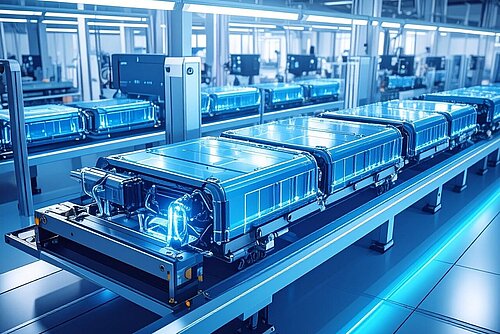
The transition to electric mobility is accelerating worldwide. As electric vehicle (EV) production grows, so does the number of batteries reaching the end of their service life. This creates both a challenge and an opportunity: recovering valuable raw materials and reintroducing them into the manufacturing cycle.
Battery recycling is becoming a critical part of the circular economy. However, recycling large volumes of lithium-ion batteries safely and efficiently requires more than traditional recycling methods. Automation is increasingly playing a key role in making battery recycling scalable, safe, and economically viable.
Why Battery Recycling Matters
Lithium-ion batteries contain valuable materials such as lithium, nickel, cobalt, copper, and graphite. Extracting these raw materials from natural resources can be energy-intensive, costly, and environmentally challenging.
Battery recycling helps:
- Reduce demand for newly mined materials
- Lower the environmental footprint of battery production
- Improve resource security for manufacturers
- Support regulatory sustainability requirements
- Enable a circular economy for electric mobility
As EV adoption continues to grow, recycling infrastructure must expand accordingly. This is where automation becomes essential.
The Challenge of Scaling Battery Recycling
Unlike many traditional manufacturing processes, battery recycling involves handling products that vary significantly in design, chemistry, size, and condition.
Recycling facilities must often process:
- EV battery packs
- Battery modules
- Individual battery cells
- Damaged or defective batteries
- Batteries from different manufacturers
Many recycling steps involve potential safety risks, including electrical hazards, thermal runaway, and exposure to hazardous materials.
Manual processing can be slow, inconsistent, and difficult to scale. Automated systems help address these challenges while improving process reliability and worker safety.
How Automation Supports Battery Recycling
Automation technologies can support multiple stages of the battery recycling process.
Automated Battery Disassembly
Before valuable materials can be recovered, battery packs often need to be dismantled into modules and individual components.
Robotic systems can assist with:
- Battery pack handling
- Screw removal
- Component separation
- Module extraction
- Material sorting
Automated disassembly helps reduce manual intervention while increasing throughput and process consistency.
Vision Systems and Inspection
Battery packs arriving at recycling facilities may differ significantly in condition.
Machine vision systems can help identify:
- Battery type
- Pack configuration
- Damaged components
- Safety risks
- Correct processing routes
These technologies support more flexible and adaptive recycling operations.
Material Handling and Sorting
Automated transport and sorting systems improve efficiency throughout the recycling process.
Typical technologies include:
- Conveyor systems
- Robotic handling units
- Automated guided vehicles (AGVs)
- Material identification systems
- Traceability solutions
These systems help ensure that valuable materials remain separated and recoverable throughout processing.
Data Collection and Traceability
As battery regulations evolve, traceability is becoming increasingly important.
Automated recycling systems can capture and document:
- Battery origin
- Processing history
- Material composition
- Recovery rates
- Quality data
This information supports regulatory compliance while improving process transparency.
Supporting the Circular Economy
The goal of the circular economy is to keep valuable materials in use for as long as possible. Battery recycling automation contributes directly to this objective by making material recovery more efficient and scalable.
Recovered materials can often be reintroduced into battery production, reducing dependence on virgin resources and helping manufacturers build more sustainable supply chains.
As battery volumes increase globally, automation will play an increasingly important role in enabling closed-loop material cycles.
Advancing Battery Recycling Through Innovation
Developing effective recycling solutions requires collaboration between technology providers, research organizations, and industry partners.
Through the DemoRec battery recycling project, HAHN Automation Group contributed to the development of automated solutions for battery disassembly and recycling processes. The project demonstrates how automation technologies can support the safe and efficient recovery of valuable battery materials.
The lessons learned from such initiatives help accelerate the industrialization of battery recycling and support the long-term sustainability of electric mobility.
The Future of Automated Battery Recycling
Battery recycling is expected to become a strategic industry as the number of end-of-life EV batteries continues to grow. At the same time, manufacturers face increasing pressure to improve sustainability, secure raw materials, and reduce environmental impact.
Automation will be a key enabler of this transformation by helping recycling facilities achieve:
- Higher throughput
- Improved safety
- Better material recovery rates
- Enhanced traceability
- Greater operational efficiency
Companies investing in automated battery recycling technologies today are helping build the foundation for a more sustainable and circular battery ecosystem.
Discuss Your Battery Recycling Automation Project
Whether you are developing new recycling processes, scaling battery recovery operations, or exploring automated disassembly technologies, HAHN Automation Group can support your project with proven automation expertise.