Steer-by-wire (SbW) systems eliminate the mechanical connection between the steering wheel and the wheels. Instead, they rely on sensors, electronic control units (ECUs), and actuators to translate driver input into wheel movement.
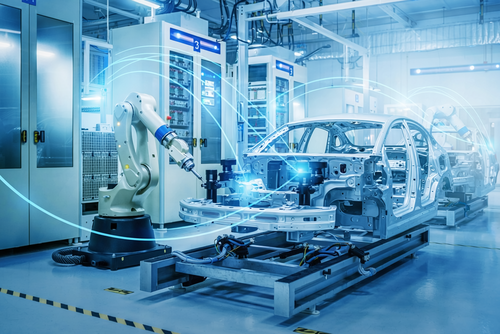
While much attention is given to system architecture and safety, manufacturing these systems at scale is equally complex. It requires high-precision assembly, functional validation, and robust automation strategies.
Core Components of a Steer-by-Wire System
A typical steer-by-wire system consists of several critical subsystems:
- Steering input unit (steering wheel module with torque/angle sensors)
- Electronic Control Unit (ECU)
- Actuator system (rack or wheel-level actuators)
- Redundant power supply systems
- Communication interfaces (CAN, Ethernet)
Each of these components must be manufactured and assembled with extremely tight tolerances, often with built-in redundancy for safety compliance (ISO 26262).
Manufacturing Challenges in Steer-by-Wire Systems
1. Functional Safety Requirements
SbW systems are safety-critical. Manufacturing processes must ensure:
- Full traceability of every component
- 100% end-of-line (EOL) testing
- Redundant system validation
2. High Precision Assembly
Sensors and actuators require:
- Micron-level positioning accuracy
- Controlled torque application
- Calibration during assembly
3. Integration of Electronics and Mechanics
Unlike traditional steering systems, SbW combines:
- Mechatronics
- Embedded software
- Power electronics
This requires synchronized production processes across multiple domains.
Typical Steer-by-Wire Manufacturing Process
1. Component Preparation
- Sensor pre-calibration
- PCB population and testing
- Motor and actuator pre-assembly
Automation focus:
High-speed electronics production and automated inspection systems
2. Subsystem Assembly
- Steering input module assembly
- ECU housing and sealing
- Actuator integration
Automation focus:
Modular assembly cells combining robotics, feeding systems, and precision joining technologies
3. Calibration and Parameterization
Each system must be calibrated to ensure accurate steering response:
- Sensor alignment
- Torque feedback calibration
- Software parameter flashing
Automation focus:
Inline calibration stations with real-time data processing
4. End-of-Line Testing (EOL)
Critical step in SbW manufacturing:
- Functional testing under simulated driving conditions
- Redundancy checks
- Fail-safe validation
Automation focus:
Highly integrated test benches with data logging and traceability systems
5. Final Assembly and Logistics
- Final housing assembly
- Labeling and serialization
- Packaging and tracking
Automation focus:
Digital traceability systems and MES integration
Role of Automation in Steer-by-Wire Production
Automation is not optional—it is essential for SbW manufacturing:
- Consistency: Ensures repeatable high-precision assembly
- Scalability: Supports ramp-up for EV platforms
- Traceability: Enables full lifecycle data tracking
- Quality assurance: Integrates testing directly into production
Modern production systems often rely on:
- Modular assembly platforms
- Flexible automation cells
- Integrated inspection and testing systems
Modular Manufacturing Approaches
To handle increasing product variants, manufacturers are adopting modular automation concepts:
- Reconfigurable assembly cells
- Standardized interfaces between stations
- Scalable production lines
This approach allows:
- Faster product launches
- Easier adaptation to design changes
- Reduced downtime during reconfiguration
A key enabler for this flexibility is the use of standardized modular platforms
Quality Assurance and Traceability
Given the safety-critical nature of SbW systems, quality management includes:
- Serial-level traceability
- Inline vision inspection
- Data-driven quality control
- Closed-loop feedback systems
Every unit must be fully documented and verifiable throughout its lifecycle
Future Trends in Steer-by-Wire Manufacturing
- Increased integration of AI in quality inspection
- Higher levels of system redundancy
- Greater demand from autonomous and EV platforms
- Fully digitalized production environments (Industry 4.0)
Conclusion: Manufacturing as a Key Enabler of Steer-by-Wire
Steer-by-wire is not just a breakthrough in vehicle architecture—it also represents a major shift in manufacturing requirements.
Companies that can combine:
- Precision assembly
- Advanced testing
- Flexible automation
are best positioned to scale SbW systems for next-generation mobility.
Scaling Steer-by-Wire Production with the Right Automation Partner
As steer-by-wire systems move from innovation to large-scale production, manufacturers face increasing pressure to deliver precision, reliability, and scalability at the same time.
This is where advanced automation becomes a key differentiator.
The HAHN Automation Group supports automotive manufacturers and suppliers with:
- Modular automation platforms for flexible production
- High-precision assembly systems for mechatronic components
- Integrated testing and validation solutions
- End-to-end digitalization and traceability
Whether you are ramping up a new steer-by-wire platform or optimizing an existing production line, the right automation strategy can significantly reduce time-to-market and ensure consistent product quality.