Relocating production equipment can be a strategic decision driven by capacity expansion, facility consolidation, cost optimization or changing market demands. While machine relocation projects offer significant opportunities, they also require careful planning to avoid unexpected costs, production downtime and operational risks.
One of the first questions manufacturers ask is: How much does a machine relocation cost?
The answer depends on a variety of technical, logistical and operational factors. Understanding these factors early in the planning process can help companies develop realistic budgets and minimize project risks.
Why Companies Relocate Production Equipment
Machine relocation projects can range from moving a single workstation within a facility to transferring an entire production line to another country.
Common reasons for relocation include:
- Facility expansion or consolidation
- Production footprint optimization
- Capacity increases at another site
- Integration following mergers or acquisitions
- Cost reduction initiatives
- Shifting production closer to customers
Regardless of the reason, successful relocation projects require much more than simply transporting equipment from one location to another.
The Main Factors That Influence Relocation Costs
Every machine relocation project is unique. However, several factors typically have the greatest impact on overall project costs.
Size and Complexity of the Equipment
The complexity of the production system is often one of the most significant cost drivers.
Factors include:
- Number of machines involved
- Physical dimensions and weight
- Level of automation
- Number of interconnected systems
- Utility requirements
A highly automated production line generally requires more engineering effort than relocating standalone equipment.
Dismantling and Preparation
Before transportation can begin, equipment must be safely disconnected, documented and dismantled.
This phase may include:
- Mechanical disassembly
- Electrical disconnection
- Labeling and documentation
- Preservation of critical components
- Packaging and protection for transport
Proper preparation reduces risks during transportation and simplifies recommissioning at the new location.
Transportation Requirements
Transportation costs depend on several variables, including:
- Distance between facilities
- Domestic or international transport
- Road, sea or air freight requirements
- Special handling for oversized equipment
- Customs and import regulations
International relocation projects often require additional planning to ensure compliance with local regulations and shipping requirements.
Installation and Recommissioning
Once equipment arrives at its new location, installation and startup activities begin.
Typical tasks include:
- Mechanical reassembly
- Electrical integration
- Software verification
- System calibration
- Functional testing
- Production ramp-up support
The complexity of these activities directly influences both project duration and cost.
Refurbishment During Relocation: An Opportunity for Modernization
Many manufacturers use a relocation project as an opportunity to improve equipment performance and reliability.
Since the equipment is already being dismantled, modernization activities can often be completed more efficiently than during normal production operation.
Examples include:
- Replacing obsolete control systems
- Upgrading electrical components
- Improving machine safety
- Updating software and HMI systems
- Increasing flexibility for new product variants
Combining relocation and refurbishment can help extend equipment lifetime while reducing future maintenance and obsolescence risks.
The Cost of Production Downtime
One of the most important considerations is not the relocation itself, but the impact of production downtime.
Unplanned delays can result in:
- Lost production output
- Missed customer deliveries
- Additional labor costs
- Increased project expenses
A detailed relocation strategy helps minimize downtime and ensures a smoother transition to the new production environment.
Common Risks That Can Increase Project Costs
Several factors can increase relocation costs if they are not identified early.
These include:
- Incomplete equipment documentation
- Obsolete components discovered during dismantling
- Unexpected mechanical wear
- Transportation damage
- Site readiness issues
- Delays during commissioning
Comprehensive project planning and risk assessment are essential to avoid unnecessary costs.
Case Example: Relocation and Refurbishment of an Automation Line
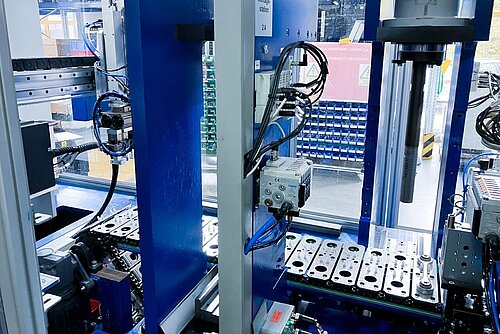
A recent project completed by HAHN Automation Group involved the relocation and refurbishment of a coupling rod automation line.
The project included dismantling, transportation, refurbishment activities and recommissioning at the new production site. By combining relocation with modernization measures, the customer was able to improve long-term equipment performance while successfully transferring production operations.
Learn more in our case study Coupling Rod Automation Line Relocation & Refurbishment.
How to Estimate the Cost of a Machine Relocation Project
Developing an accurate budget requires a detailed assessment of:
- Equipment scope
- Current machine condition
- Transportation requirements
- Facility readiness
- Refurbishment opportunities
- Project timeline
- Production downtime constraints
Early evaluation helps identify risks, improve planning accuracy and establish realistic project expectations.
Conclusion
The cost of a machine relocation project depends on far more than transportation alone. Factors such as equipment complexity, dismantling requirements, recommissioning activities and potential modernization measures all influence the final investment.
With proper planning, manufacturers can minimize downtime, reduce project risks and even use the relocation as an opportunity to improve equipment performance and extend asset lifetime.
Planning a Machine Relocation Project?
Every relocation project presents unique technical and operational challenges. A structured assessment helps identify potential risks, estimate project costs and uncover opportunities for modernization.
Talk to our automation experts about your machine relocation requirements.