
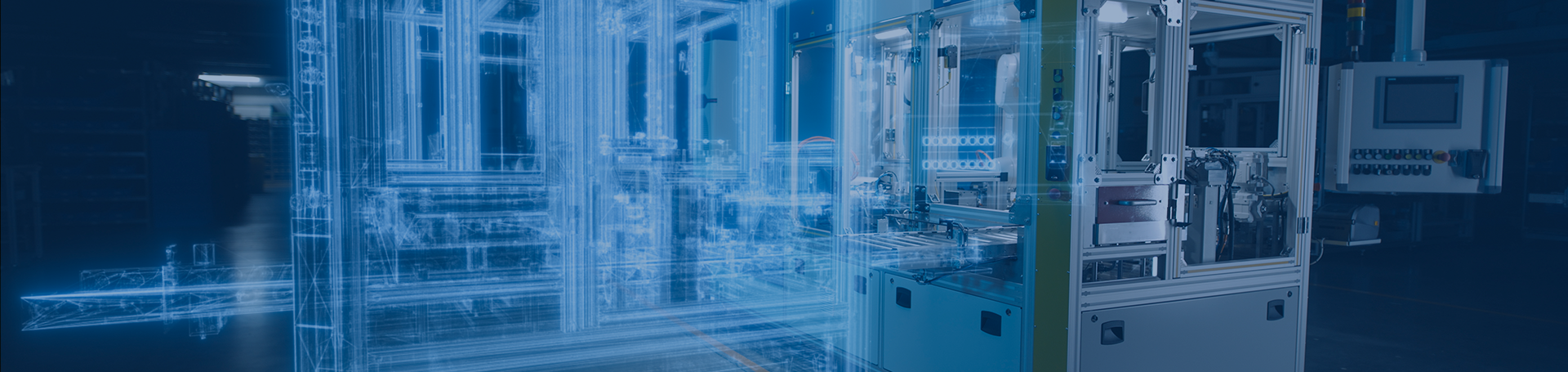
Digital Twin — Virtual Intelligence for Real Efficiency
The digital twin is a central element of modern Industry 4.0 manufacturing. As a precise virtual representation of real machines, systems, or products, it enables processes to be monitored, simulated, and optimized in real time.
The HAHN Automation Group helps companies apply this technology strategically—to accelerate development, increase quality, and strengthen long-term competitiveness.
What Is a Digital Twin?
The Value of the Digital Twin
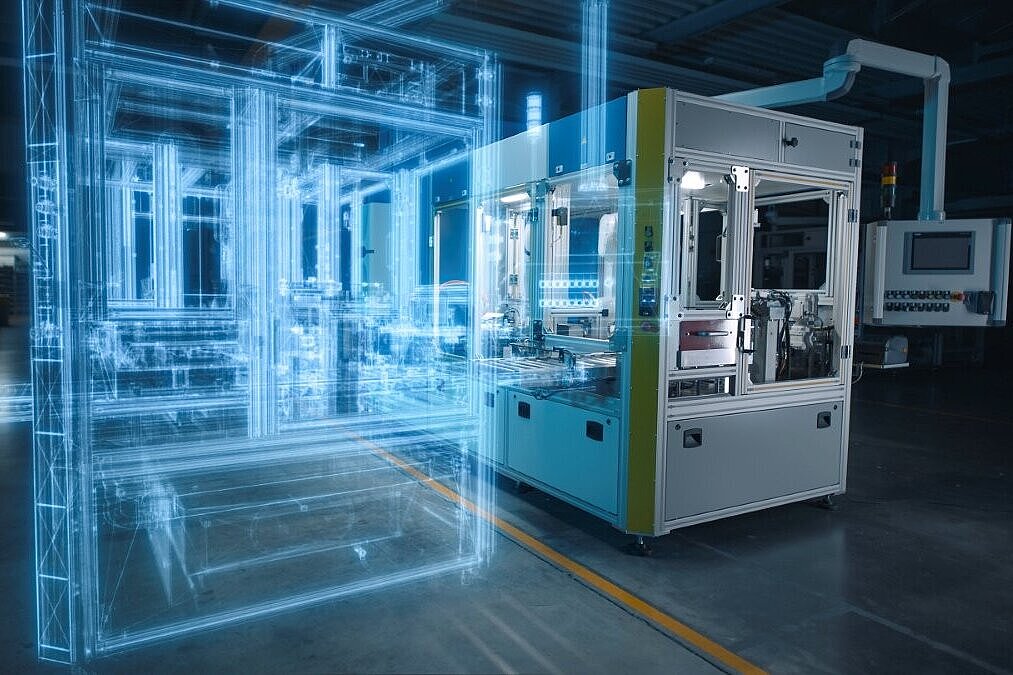
A digital twin is an exact digital replica of a physical system. By connecting sensor data, simulation, and analytics, it creates a virtual environment where production processes can be planned, tested, and controlled with precision. This makes every machine part of a connected, learning Smart Factory.
All HAHN Engineering departments work together on one consistent digital model—the digital twin. This ensures that the entire engineering process is aligned with the virtual representation from the very beginning.
- A Head Start Through Virtual Development
The digital twin transforms how products and systems are developed. Real data and digital simulations allow functions, workflows, and mechanical loads to be tested long before any physical model is built. Development cycles become shorter, costs decrease, and results become more accurate. - Reliable Processes in Production
In manufacturing, the digital twin enables virtual commissioning. Machines, robots, and systems are tested and optimized digitally before they start operating in the real environment. This reduces downtime and increases reliability. - Data as the Key to Efficiency
The digital twin continuously provides insights into machine condition and performance. Based on this data, processes can be adjusted, maintenance can be planned, and production workflows can be improved. The result is greater transparency, higher efficiency, and long-term value.
Questions About Digital Twins? We Have Answers
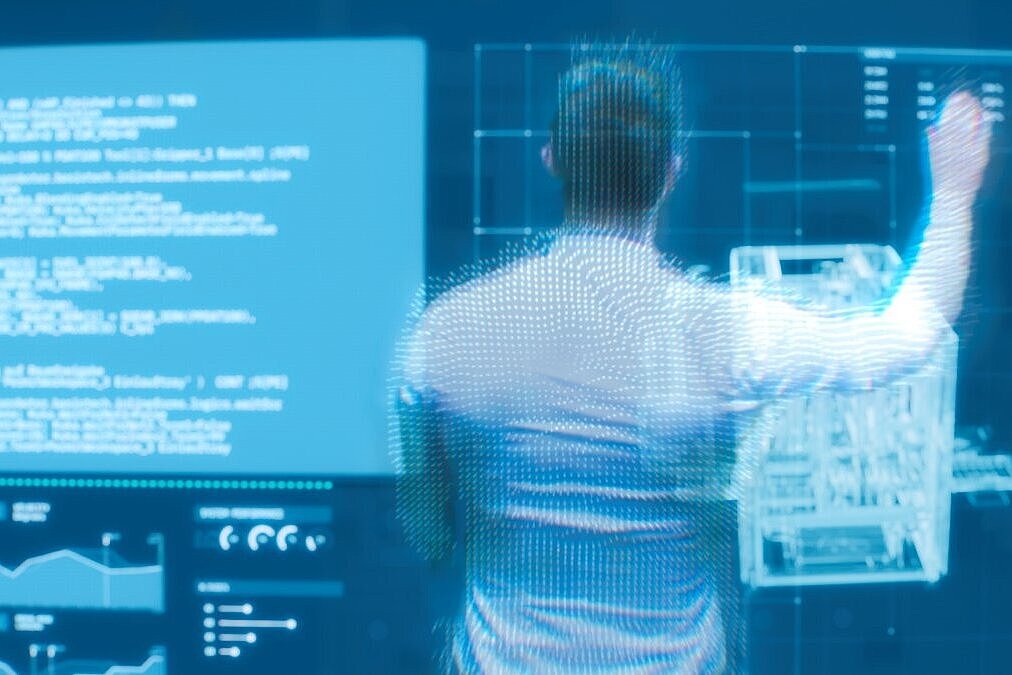
Digital Twin vs. Digital Shadow
Two Concepts, One Goal — But Different Depth: Both the digital twin and the digital shadow create a virtual representation of machines or processes. The key difference lies in how data flows between the real and digital worlds.
A true digital twin reflects the entire lifecycle of a machine or product—from development to operation to maintenance. It forms the foundation for predictive maintenance, flexible manufacturing, and sustainable process optimization in Industry 4.0.
Digital Twin — Bidirectional and Intelligent
A digital twin features a continuous, two-way flow of information between the physical asset and the digital model. Changes in the system instantly appear in the twin—and simulation results can actively influence the real system. This enables not only monitoring, but targeted optimization.
- Bidirectional data exchange between physical and virtual systems. Changes in the model can influence the real system.
- Simulates, analyzes, and optimizes processes in real time.
- Foundation for predictive maintenance, process optimization, and Smart Factory applications.
Digital Shadow — One-Way Representation
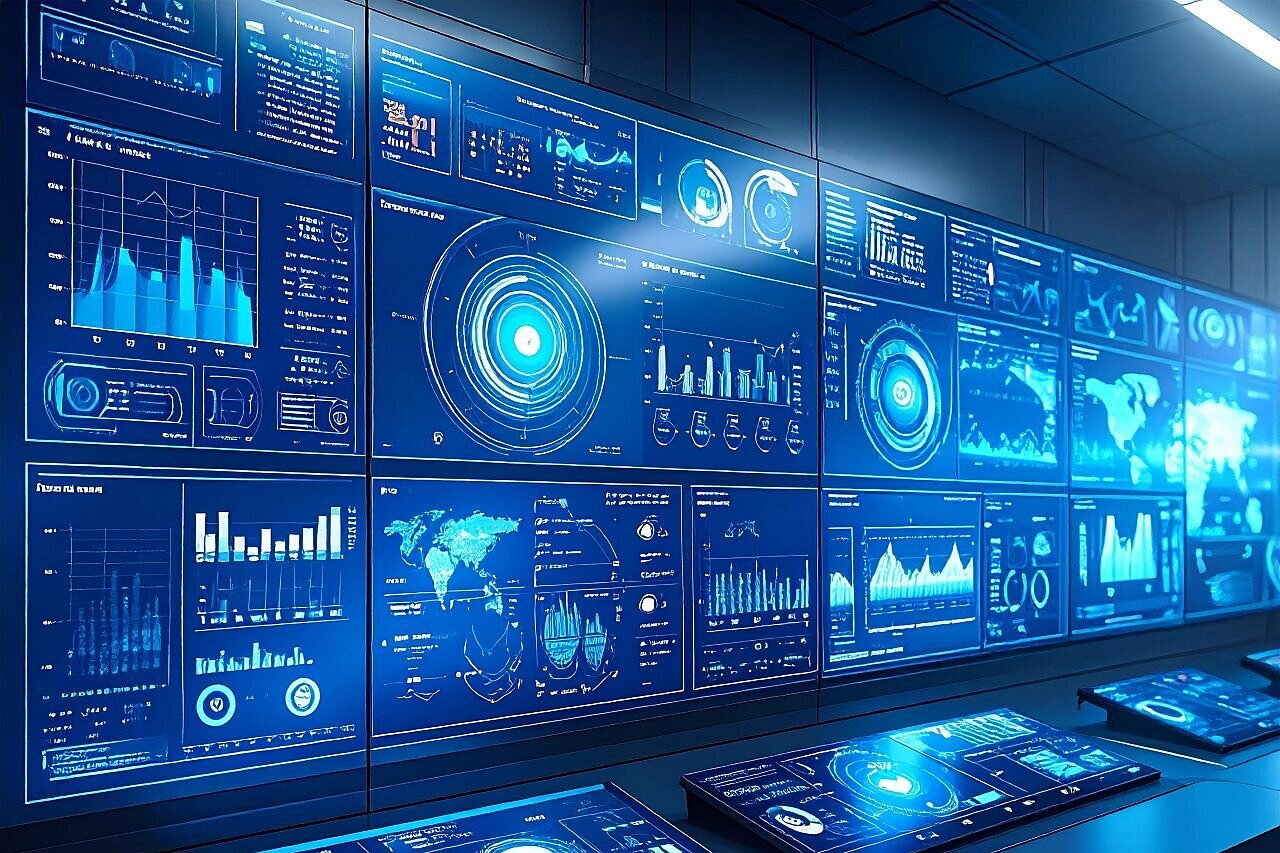
A digital shadow is a snapshot of reality. Data flows in only one direction: from the machine to the digital model. It supports analysis but does not enable active control or feedback.
- One-way data flow: information moves from the real system to the digital model. No feedback loop.
- Enables analysis and documentation but no active control.
- Supports monitoring and reporting, but remains passive.
Digital Twin FAQ
What is a digital twin?
A digital twin is a virtual representation of a real machine, system, or product. It uses real-time data to simulate and continuously optimize the behavior and condition of its physical counterpart.
How is a digital twin different from a digital shadow?
A digital shadow shows data in one direction only, whereas a digital twin communicates bidirectionally. This allows the real and virtual systems to interact and improve one another.
What advantages does a digital twin offer in product development?
A digital twin makes it possible to test functions and processes virtually before any physical prototypes are built. This saves time, reduces costs, and increases product quality.
How is the digital twin used in production?
In manufacturing, it supports virtual commissioning, system monitoring, and process optimization. This minimizes downtime and improves efficiency.
How does the HAHN Automation Group support implementation?
We combine engineering expertise with advanced Digital Twin Technology. From modeling to integration to optimization, we support companies throughout their entire digital twin journey.
Contact Us
Are you ready to discuss your next project? Let our experts answer any questions you may have. Please use the contact form, and we will get back to you as soon as possible.