
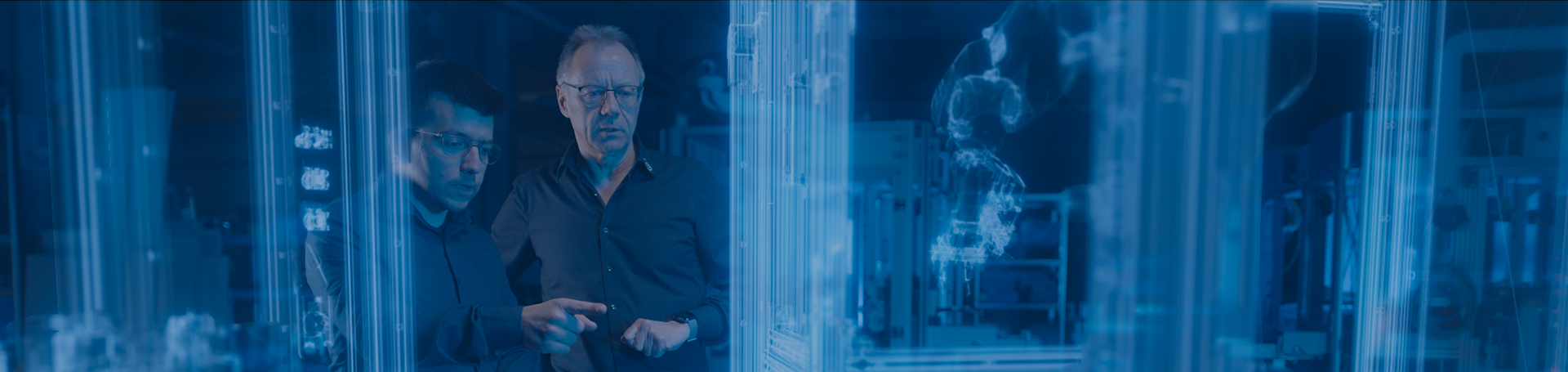
Virtual Commissioning
Virtual commissioning is the key to faster projects, lower risks, and higher quality. By combining real control systems, digital models, and modern simulation technology, machines and production lines can be tested in a virtual environment long before physical commissioning begins. This creates the foundation for efficient automation based on the latest state of the art.
Learn more about digital integration on our page Digitalization & Virtual Commissioning.
Benefits of Virtual Commissioning
Efficiency Through Simulation
- Digital Simulation as a Test Run for Real Systems
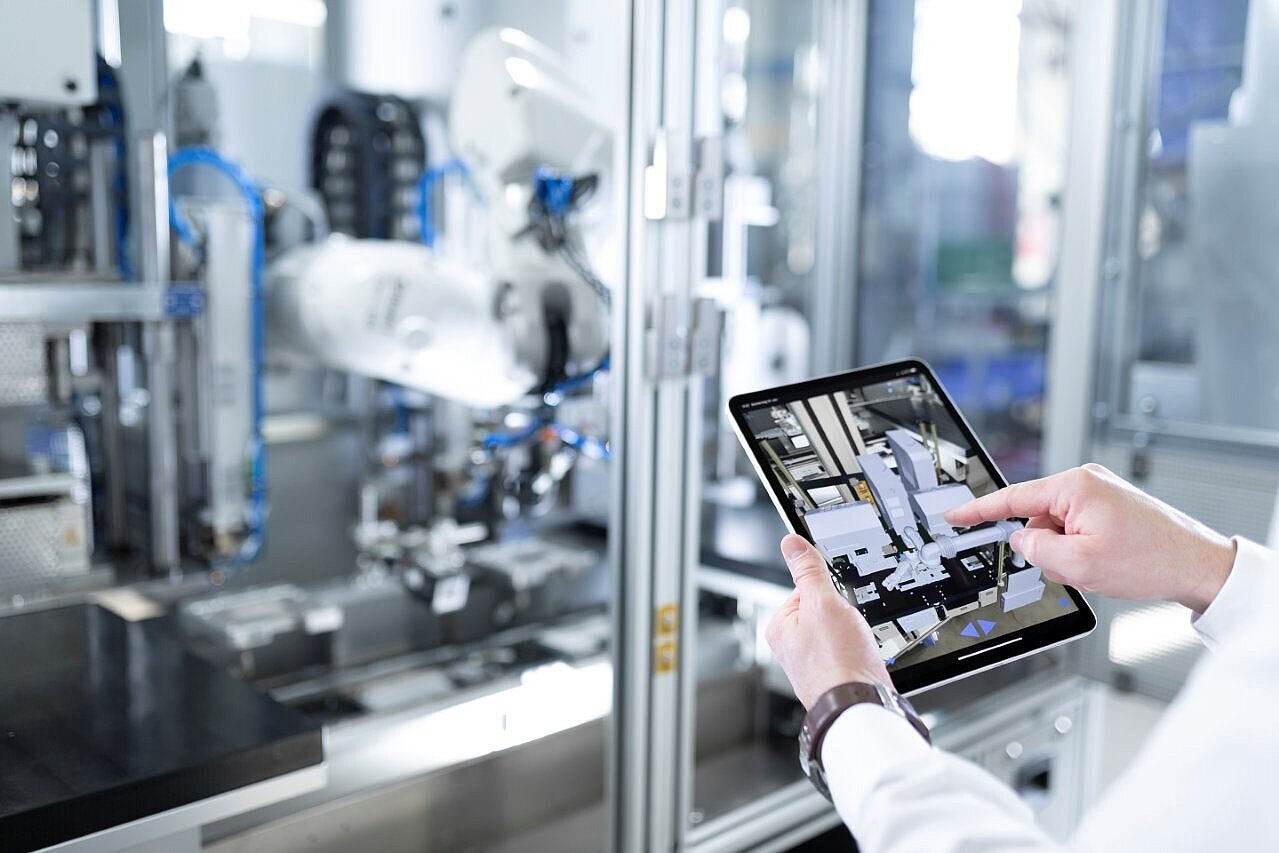
Virtual commissioning is a digital test run for machines and automated systems. Control technology, mechanics, and software are connected inside a simulation environment to validate processes under realistic conditions—before the physical system exists. It forms the bridge between digital development and real-world production. - State of the Art in Industry 4.0
As part of modern Industry 4.0 manufacturing and closely linked to the digital twin, virtual commissioning is now considered state of the art in machine and system engineering. It enables full virtual validation of processes, early detection of errors, and adjustments before costs occur. - Efficiency, Quality, and Safety Combined
Shorter project timelines, reduced risks, and a smoother production ramp-up: virtual commissioning makes every phase more predictable—from engineering to production. This allows companies
Getting in Touch
Our experts are happy to support you with personalized advice and insights on all aspects of Virtual Commissioning. Feel free to contact us with your individual request – we’re here to help you shape the future of automation.

Virtual commissioning is no longer a future topic — it is state of the art.
Simulating complete systems gives us valuable time, helps avoid errors, and gets our customers into production faster. The digital twin forms the foundation for this advantage.
Ulrich Kessler, Manager Product Management
Virtual Commissioning FAQ
What is virtual commissioning?
It refers to the simulation and testing of machines, systems, and control software in a digital environment—before they are physically implemented. This allows errors to be identified early and processes to be optimized efficiently.
What are the benefits of virtual commissioning?
It saves time, reduces risks, and increases quality. Virtual testing shortens development and commissioning phases, prevents downtime, and makes production ramp-ups more predictable. Code generation is independent of hardware, and global teams can work on the same model simultaneously.
What software is used for virtual commissioning?
Depending on the project, specialized virtual commissioning software is used to integrate mechanics, electronics, and control systems. These tools enable communication between the actual PLC and the digital model.
The HAHN Automation Group uses iPhysics by Machineering, allowing us to work with native engineering data, eliminate the need for exchange formats, and deploy software programs one-to-one onto the physical production line.
How is virtual commissioning connected to the digital twin?
The digital twin is the foundation of the simulation. It provides a realistic digital representation of machines and systems, enabling control logic, motion, and processes to be tested virtually—a core component of Industry 4.0.
Is virtual commissioning already state of the art?
Yes. It is an established part of modern automation projects and is used across a growing number of industries. Companies that adopt virtual commissioning shorten development cycles and secure long-term competitiveness.
Contact Us
Are you ready to discuss your next project? Let our experts answer any questions you may have. Please use the contact form, and we will get back to you as soon as possible.