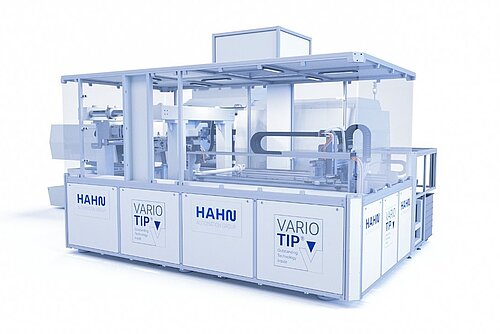
Blood tube manufacturing is a highly demanding process within MedTech production.
Manufacturers must ensure:
- consistent product quality
- contamination-free processes
- scalable production systems
At the same time, increasing demand and regulatory requirements place additional pressure on production environments. Automation plays a key role in addressing these challenges—but only when systems are designed with a clear focus on stability, control, and scalability.
This article provides an overview of:
- key challenges in blood tube production
- proven automation solutions
- best practices for system design
Key Challenges in Blood Tube Manufacturing
Ensuring Consistent Product Quality
Maintaining high quality across large production volumes is one of the primary challenges.
Common issues include:
- process variability
- inconsistent handling
- defects caused by unstable conditions
Learn more: How to Improve Quality in Blood Tube Production
Minimizing Contamination Risks
Blood tubes are highly sensitive products that require controlled production environments.
Key risks include:
- exposure to external particles
- manual handling
- open process steps
Learn more: How to Reduce Contamination Risks in Blood Tube Production
Read Blog Post
Core Principles of Efficient Automation Systems
Across all challenges, several principles consistently apply:
- System integration
Align all processes within a unified system. - Process synchronization
Ensure consistent cycle times across all steps. - Minimized handling
Reduce interactions to lower risk. - Controlled environments
Protect product integrity. - Flexible system design
Enable scalability and adaptability.
These principles form the foundation of high-performance automation systems.
Centralized vs. Decentralized Production Approaches
Decentralized Systems
- multiple independent units
- limited coordination
- higher variability
Centralized Systems
- synchronized processes
- improved control
- higher efficiency
In many cases, centralized automation enables better performance and consistency.
Real-World Application: Automation in Blood Tube Production
A practical example demonstrates how these principles can be implemented:
- automation of critical process steps
- reduction of manual handling
- integration of quality control
- stabilization of process conditions
The results included:
- improved product quality
- reduced contamination risk
- increased production efficiency
Explore the full case study for detailed insights:
Case Study: Blood Tube Manufacturing
How to Approach Automation Projects Strategically
When planning automation systems for blood tube production, manufacturers should consider:
- current production limitations
- quality requirements
- contamination risks
- scalability needs
A structured approach ensures that automation investments deliver long-term value.
Conclusion
Automation in blood tube manufacturing is not just about increasing efficiency—it is about creating stable, controlled, and scalable production systems.
By focusing on:
- integration
- process stability
- contamination control
manufacturers can achieve:
- higher product quality
- improved reliability
- sustainable production growth
Looking to optimize your blood tube production?
Get in touch with our automation experts to explore tailored solutions for your specific requirements: