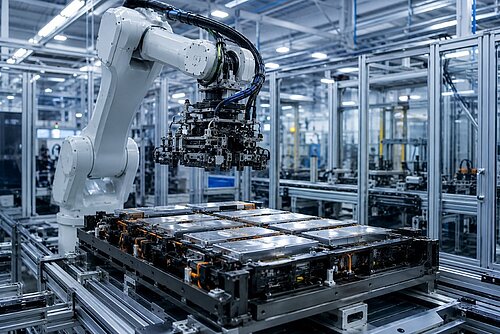
The rapid growth of electric vehicles and battery energy storage systems is creating unprecedented demand for efficient battery recycling. As more lithium-ion batteries reach the end of their service life, manufacturers and recyclers face increasing pressure to recover valuable materials safely, economically, and at scale.
Battery recycling is no longer simply a waste management process. It has become a strategic part of the battery value chain, helping secure critical raw materials while supporting the transition toward a circular economy.
To meet these growing demands, automation is becoming an essential enabler. From battery disassembly and intelligent inspection to automated material handling and digital traceability, advanced automation technologies are helping recycling facilities improve safety, increase throughput, and maximize material recovery.
Why Battery Recycling Is Becoming a Strategic Industry
The battery industry is experiencing rapid transformation. Global demand for lithium-ion batteries continues to rise, driven by electric vehicles, renewable energy storage, and the electrification of industrial applications.
At the same time, governments and manufacturers are working to reduce dependence on virgin raw materials while strengthening supply chain resilience.
Battery recycling supports these objectives by enabling the recovery of valuable materials such as:
- Lithium
- Nickel
- Cobalt
- Copper
- Graphite
Recovering these resources helps reduce environmental impact, supports sustainability targets, and contributes to a more resilient battery supply chain.
As recycling volumes continue to increase, industrial-scale automation will become a key requirement for efficient processing.
What Is Battery Recycling Automation?
Battery recycling automation refers to the use of automated systems throughout the recycling process to improve safety, efficiency, quality, and scalability.
Instead of relying heavily on manual operations, automated recycling facilities integrate robotics, vision systems, intelligent handling technologies, and digital process monitoring.
Automation can support virtually every stage of battery recycling, including:
- Battery identification
- Inspection and diagnostics
- Robotic battery disassembly
- Material handling
- Sorting processes
- Process monitoring
- Data collection
- Traceability
The result is a more reliable and repeatable recycling process capable of handling increasing battery volumes and evolving battery designs.
Core Technologies Used in Battery Recycling Automation
Robotic Battery Disassembly
Battery packs consist of numerous interconnected components that must be separated before valuable materials can be recovered.
Robotic systems can assist with:
- Battery pack positioning
- Screw removal
- Cover opening
- Module extraction
- Component separation
Automated disassembly helps reduce manual handling while improving process consistency and worker safety.
Machine Vision and Intelligent Inspection
No two battery packs are exactly alike. Manufacturers use different housing designs, cell formats, and connection technologies, making flexible inspection essential.
Vision systems support battery recycling by identifying:
- Battery type
- Pack configuration
- Damaged components
- Missing parts
- Correct processing routes
These technologies enable recycling systems to adapt to varying battery designs with minimal manual intervention.
Automated Material Handling
Efficient material flow is critical for industrial battery recycling.
Automation technologies commonly include:
- Conveyor systems
- Robotic handling
- Automated transfer systems
- Buffer stations
- Sorting equipment
Automated handling minimizes unnecessary manual transport while improving overall plant efficiency.
Digital Traceability and Process Monitoring
As battery regulations evolve, documentation and traceability are becoming increasingly important.
Modern automation platforms can record:
- Battery identification
- Processing history
- Material flow
- Quality data
- Production parameters
This information supports process optimization, regulatory compliance, and continuous improvement.
The Biggest Challenges in Battery Recycling Automation
Although automation offers significant benefits, battery recycling remains one of the most demanding industrial applications.
Battery Design Diversity
Unlike standardized manufacturing environments, recycling facilities process batteries from different manufacturers, generations, and applications.
Variations in battery size, chemistry, housing design, and internal architecture require highly flexible automation solutions.
Safety Requirements
Lithium-ion batteries present unique safety risks throughout the recycling process.
Potential hazards include:
- High-voltage components
- Residual electrical energy
- Thermal runaway
- Mechanically damaged batteries
Automation helps reduce operator exposure while enabling controlled and repeatable handling of potentially hazardous products.
Flexible Production Systems
Battery technology is evolving rapidly. New battery formats, pack architectures, and cell technologies require recycling systems that can adapt without extensive redesign.
Modular automation concepts make it easier to expand or modify recycling processes as market requirements change.
Learn more about this approach in our article How Modular Automation Systems Are Designed.
Balancing Throughput and Process Safety
As recycling capacity increases, operators must balance productivity with safe battery handling.
Automation enables higher throughput while maintaining consistent process control and reducing the risk of human error.
Quality and Traceability
Future recycling operations will require complete transparency across the entire process.
Automated documentation and traceability systems help ensure that valuable materials can be tracked throughout recycling while supporting quality assurance and regulatory compliance.
DemoRec: Advancing Battery Recycling Through Automation
Developing next-generation recycling technologies requires close collaboration between research organizations, industrial partners, and automation specialists.
Through the DemoRec Project, HAHN Automation Group contributed to the development of innovative automation solutions for battery disassembly and recycling processes.
The project demonstrates how robotics, intelligent automation, and process engineering can help make future battery recycling operations safer, more efficient, and more scalable.
Future Trends in Battery Recycling
Battery recycling is expected to evolve rapidly over the coming years as battery volumes increase and sustainability requirements become more ambitious.
Several trends are shaping the future of the industry.
AI-Supported Recycling Processes
Artificial intelligence is expected to improve battery identification, inspection, and process optimization, enabling recycling facilities to respond more effectively to increasingly diverse battery designs.
Flexible Robotics
Future recycling systems will require robots capable of handling multiple battery variants without extensive mechanical changeovers.
Increased Material Recovery
Advances in recycling technologies aim to maximize recovery rates while reducing energy consumption and material losses.
Closed-Loop Manufacturing
Recovered battery materials are expected to play an increasingly important role in the production of new batteries, supporting closed-loop manufacturing strategies.
Digital Traceability
Growing regulatory requirements will drive greater adoption of digital documentation and material tracking throughout the recycling process.
Automation Will Shape the Future of Battery Recycling
The future of battery recycling depends on technologies that can safely process increasing battery volumes while maximizing resource recovery and operational efficiency.
Automation provides the flexibility, precision, and scalability needed to meet these demands. By combining robotics, intelligent inspection, digital traceability, and advanced process control, manufacturers and recycling companies can build more resilient and sustainable recycling operations.
As the battery industry continues to expand, automation will remain a key driver of safe, efficient, and economically viable battery recycling.
Further Reading
Continue exploring battery recycling and automation:
- How Battery Recycling Automation Supports the Circular Economy
- Battery Recycling Process Explained: From Battery Pack to Recovered Materials
- How Modular Automation Systems Are Designed
Ready to Advance Your Battery Recycling Process?
Whether you are developing new recycling technologies or scaling industrial battery recycling operations, automation can help improve safety, efficiency, and process reliability.
Contact our experts to discuss your battery recycling application and discover how HAHN Automation Group supports innovative automation solutions for the circular economy.