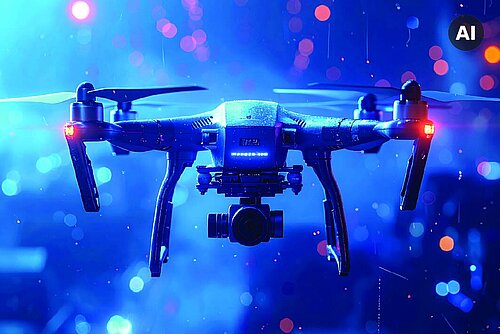
The global drone industry is entering a new phase of growth. What was once a niche market has evolved into a rapidly expanding ecosystem that serves industries such as logistics, agriculture, infrastructure inspection, surveying, public safety, and defense.
As drone technology becomes more sophisticated and production volumes continue to increase, manufacturers face a new challenge: how to produce advanced unmanned aerial vehicles (UAVs) efficiently, consistently, and at scale.
Modern drone manufacturing requires much more than assembling components. It involves the integration of lightweight structures, advanced electronics, precision sensors, software systems, and comprehensive quality assurance processes. To meet growing demand while maintaining product quality, manufacturers are increasingly adopting automation technologies throughout the production process.
This article explores the key technologies, challenges, and automation strategies shaping the future of drone manufacturing.
What Is Drone Manufacturing Automation?
Drone manufacturing automation refers to the use of automated systems, robotics, testing technologies, and digital manufacturing tools to improve the efficiency, consistency, and scalability of UAV production.
Automation can support virtually every stage of the manufacturing process, including:
- Component handling
- Mechanical assembly
- Electronics integration
- Adhesive dispensing
- Precision fastening
- Sensor installation
- Calibration
- Functional testing
- Traceability and data collection
The objective is not simply to increase production speed. Automation also helps manufacturers improve quality, reduce variability, and establish scalable production processes that can support future growth.
Understanding the Core Components of a Drone
To understand the role of automation, it is important to first examine the major subsystems that make up a modern UAV.
Most drones consist of:
- Structural airframe components
- Electric propulsion systems
- Flight control electronics
- Navigation and positioning sensors
- Communication modules
- Batteries and power management systems
- Mission-specific payloads such as cameras or LiDAR sensors
Each subsystem introduces unique manufacturing requirements and quality considerations.
For a detailed overview of how these systems are assembled, see our article How Are Drones Manufactured? Key Production Steps for Modern UAV Systems.
Structural Assembly and Lightweight Manufacturing
One of the defining characteristics of drone design is the need to minimize weight without compromising strength.
Manufacturers commonly use:
- Carbon fiber composites
- Lightweight aluminum structures
- Engineering plastics
- Hybrid material designs
These materials improve flight performance but also create manufacturing challenges. Maintaining dimensional accuracy, handling delicate components, and ensuring repeatable assembly processes become increasingly important as production volumes grow.
Automation can support structural assembly through:
- Precision fixturing
- Robotic handling systems
- Automated fastening processes
- Vision-guided positioning technologies
These solutions help improve repeatability while reducing operator dependency.
Electronics Integration in Modern UAV Production
Electronics represent one of the most complex aspects of drone manufacturing.
Modern UAV platforms often integrate:
- Flight controllers
- GPS modules
- Communication systems
- Power distribution units
- Embedded processors
- Sensor interfaces
As functionality increases, manufacturers must manage growing component density within limited installation space.
Automation can improve electronics integration by supporting:
- Automated assembly processes
- Controlled cable routing
- Connector verification
- Error-proofing procedures
- In-line quality inspections
These capabilities help ensure consistent performance across every unit produced.
Sensor Integration and Calibration
Advanced sensors have become essential components in many commercial and industrial drone applications.
Examples include:
- High-resolution imaging systems
- Thermal cameras
- LiDAR sensors
- Radar technologies
- Environmental monitoring equipment
The performance of these systems depends heavily on accurate installation and calibration.
Even small positioning deviations can negatively affect data quality and operational performance.
The challenges associated with precision sensor integration are similar to those addressed in our Full Automatic LiDAR Sensor Assembly Line, where automated assembly, calibration, and testing processes help ensure reliable sensor functionality.
Adhesive Dispensing and Precision Fastening
Many drone assemblies rely on adhesives and precision fastening technologies.
Typical applications include:
- Structural bonding
- Electronics protection
- Vibration reduction
- Environmental sealing
Automated dispensing systems provide:
- Consistent adhesive volumes
- Repeatable application patterns
- Reduced material waste
- Improved process control
Similarly, automated screwdriving and fastening systems ensure critical joints meet specified torque and quality requirements.
These technologies help reduce variability while improving long-term product reliability.
Why Quality Assurance Is Becoming More Important
As drones move into increasingly critical applications, product quality becomes a major competitive differentiator.
Manufacturers must verify:
- Mechanical integrity
- Electrical functionality
- Sensor performance
- Communication reliability
- Battery behavior
- Software operation
Manual inspection methods can become difficult to scale as production volumes increase.
Automation enables manufacturers to implement standardized inspection procedures and collect production data throughout the manufacturing process.
Traceability and Digital Manufacturing Records
Modern UAV production increasingly relies on comprehensive production data.
Manufacturers often require traceability for:
- Components
- Assembly operations
- Process parameters
- Calibration records
- Test results
Digital traceability systems provide valuable insights into manufacturing performance while supporting quality management initiatives.
As drone applications expand into highly regulated and mission-critical environments, traceability is becoming a key requirement rather than a competitive advantage.
Scaling from Prototype to Series Production
Many drone manufacturers begin with engineering-focused prototype production.
However, scaling from low-volume manufacturing to industrial production introduces significant challenges:
- Increasing throughput
- Maintaining quality consistency
- Reducing process variability
- Managing production costs
- Supporting future demand growth
These challenges are explored in greater detail in our article The Biggest Manufacturing Challenges in Advanced Drone Production.
Automation plays a critical role in enabling manufacturers to scale production while maintaining performance and quality standards.
Flexible Manufacturing for a Rapidly Evolving Market
The drone industry continues to evolve rapidly.
Manufacturers must frequently adapt to:
- New product variants
- Changing payload configurations
- Emerging sensor technologies
- New market requirements
This is why many companies increasingly adopt modular and flexible automation concepts.
Solutions inspired by approaches such as Modular Automation Solutions for Smart Meter Manufacturing demonstrate how scalable production architectures can support future product evolution while protecting manufacturing investments.
The Role of Automation in Advanced Drone Manufacturing
The benefits of automation extend far beyond increased production speed.
Modern automation systems can help manufacturers:
- Improve assembly accuracy
- Increase throughput
- Enhance product quality
- Enable full traceability
- Reduce manufacturing risks
- Support scalable growth
- Improve overall equipment effectiveness (OEE)
As UAV technology becomes more sophisticated, these advantages become increasingly important.
Our Automation Solutions for Advanced Drone Manufacturing case study demonstrates how manufacturers can leverage advanced automation technologies to improve efficiency, quality, and scalability in drone production environments.
Future Trends in Drone Manufacturing
Several trends are expected to shape the future of UAV production:
- Greater use of autonomous manufacturing systems
- Increased digitalization and data analytics
- Advanced in-line quality control
- AI-supported process optimization
- More flexible production architectures
- Higher levels of traceability and compliance
Manufacturers that invest in scalable automation strategies today will be better positioned to respond to future market requirements and technological developments.
Conclusion
Drone manufacturing is becoming increasingly complex as UAV systems integrate more advanced electronics, sensors, software, and communication technologies.
To remain competitive, manufacturers must balance quality, efficiency, flexibility, and scalability throughout the production process.
Automation provides a powerful foundation for achieving these goals. From structural assembly and electronics integration to testing, traceability, and production scaling, automated manufacturing systems help ensure that modern drone production can meet the demands of a rapidly growing market.
Further Reading
- How Are Drones Manufactured? Key Production Steps for Modern UAV Systems
- The Biggest Manufacturing Challenges in Advanced Drone Production
- Automation Solutions for Advanced Drone Manufacturing
- Full Automatic LiDAR Sensor Assembly Line
- Modular Automation Solutions for Smart Meter Manufacturing
Looking for an Automation Partner for Drone Manufacturing?
Whether you are developing a new UAV platform, scaling production, or optimizing existing manufacturing processes, advanced automation can help improve efficiency, quality, and long-term scalability.
Contact our experts to discuss your drone manufacturing project: