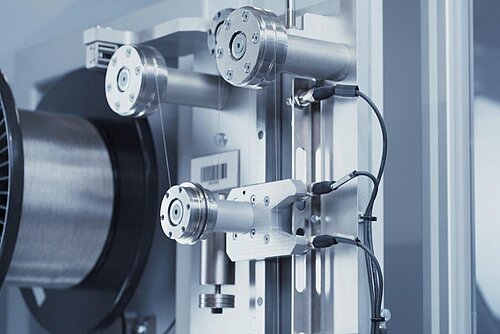
Endoscopes have become an essential part of modern healthcare. From minimally invasive surgery and diagnostics to single-use endoscopic devices, they enable physicians to perform procedures with greater precision while improving patient outcomes.
As demand for endoscopic procedures continues to grow worldwide, manufacturers face increasing pressure to deliver devices that are smaller, smarter, and more reliable. At the same time, regulatory requirements, quality expectations, and production volumes continue to rise.
Meeting these demands requires more than innovative product design. It requires manufacturing systems capable of producing highly complex medical devices with consistent quality, full traceability, and scalable production capacity.
This article explores the key challenges, technologies, and best practices shaping modern endoscope manufacturing.
What Is Endoscope Manufacturing?
Endoscope manufacturing involves the production and assembly of highly specialized medical devices used to visualize internal structures of the human body.
Depending on the application, endoscopes may include:
- Optical systems
- Camera modules
- Illumination components
- Electronic assemblies
- Mechanical structures
- Fluid management components
- Sensors and control systems
Many modern devices integrate multiple technologies within extremely compact assemblies, creating significant manufacturing complexity.
As a result, endoscope production requires a combination of precision engineering, rigorous quality control, and highly repeatable manufacturing processes.
Why Endoscope Manufacturing Is Becoming More Complex
The medical device industry is experiencing several long-term trends that directly impact endoscope production.
Miniaturization
Manufacturers are continuously reducing device size while increasing functionality.
Smaller products require more precise assembly processes, tighter tolerances, and advanced handling technologies.
Increased Product Complexity
Modern endoscopes often combine optics, electronics, software, sensors, and mechanical components within a single system.
Every subsystem must function flawlessly while maintaining overall device reliability.
Higher Quality Expectations
Healthcare providers and patients expect exceptional performance, reliability, and safety.
Manufacturers must therefore implement robust quality management and inspection strategies throughout production.
Regulatory Compliance
Global regulations such as FDA requirements, MDR, and ISO standards place increasing emphasis on process control, documentation, and traceability.
Manufacturers must be able to demonstrate that every device meets defined specifications.
Key Challenges in Endoscope Manufacturing
Precision Assembly
Many endoscope components require micron-level positioning accuracy.
Even small deviations can impact image quality, functionality, or device performance.
Product Traceability
Medical device manufacturers must maintain detailed records throughout the production process.
Traceability often includes:
- Component identification
- Process parameters
- Inspection data
- Batch information
- Product genealogy
Consistent Quality
Manufacturers must ensure that every product meets the same performance standards regardless of production volume.
This requires stable processes and effective quality assurance systems.
Scalability
As market demand grows, manufacturers need production systems capable of increasing output without sacrificing quality.
This challenge becomes particularly significant when manual assembly processes dominate production.
Manual vs. Automated Endoscope Assembly
Historically, many endoscope production processes relied heavily on skilled operators.
While manual assembly offers flexibility, it can become increasingly difficult to maintain consistency as products become more complex.
Benefits of Manual Assembly
- Flexibility for low-volume production
- Easier handling of design changes
- Lower initial investment
Benefits of Automated Assembly
- Higher repeatability
- Reduced process variation
- Improved traceability
- Increased throughput
- Enhanced quality control
- Better scalability
Most successful production concepts combine both approaches, using automation where it provides the greatest value.
Technologies Used in Automated Endoscope Manufacturing
Modern endoscope production systems utilize a wide range of advanced automation technologies.
Vision Systems
Industrial vision systems support:
- Component positioning
- Alignment verification
- Defect detection
- Quality inspection
These systems help ensure consistent assembly quality while reducing manual inspection effort.
Precision Handling Technologies
Robotic and precision handling systems enable the reliable manipulation of miniature and delicate components.
This is particularly important in applications involving optics and micro-mechanical assemblies.
Automated Testing
Testing is one of the most critical aspects of medical device manufacturing.
Typical automated tests include:
- Functional testing
- Leak testing
- Optical verification
- Electrical testing
- Performance validation
Digital Traceability Systems
Modern manufacturing systems increasingly integrate digital data collection and production monitoring.
These systems support compliance while providing valuable insights for continuous improvement.
Best Practices for Scaling Endoscope Production
Manufacturers seeking to expand production capacity should focus on several key principles.
Design for Manufacturability
Production requirements should be considered early during product development.
Design decisions can significantly influence assembly complexity and production efficiency.
Standardized Processes
Standardized manufacturing procedures improve consistency and simplify validation activities.
Integrated Quality Control
Quality assurance should be embedded throughout the production process rather than limited to end-of-line inspection.
Scalable Automation Strategies
Automation investments should support future growth and product evolution.
Flexible manufacturing platforms often provide long-term advantages compared to highly specialized standalone systems.
Case Example: Automated Single-Purpose Endoscope Production
A practical example of these principles can be found in our Automatic Single-Purpose Endoscope Production Case Study.
The project required a production solution capable of handling demanding assembly tasks while ensuring product quality, process reliability, and production efficiency.
The resulting system combined automated assembly, inspection, and testing technologies to support a highly controlled manufacturing environment.
Future Trends in Endoscope Manufacturing
Several emerging technologies are expected to further transform endoscope production.
AI-Driven Quality Inspection
Artificial intelligence is increasingly supporting automated defect detection and process optimization.
Smart Manufacturing
Connected production systems provide greater visibility into manufacturing performance and quality metrics.
Digital Twins
Virtual representations of manufacturing systems enable improved process planning and optimization.
Advanced Data Analytics
Manufacturers are leveraging production data to identify improvement opportunities and reduce process variation.
These technologies will continue to strengthen quality, efficiency, and compliance across medical device manufacturing operations.
Why Manufacturing Excellence Matters
As endoscope technologies continue to evolve, manufacturing capabilities are becoming a key competitive differentiator.
Manufacturers must balance product innovation with stringent quality requirements, regulatory compliance, and production scalability.
Automation plays a critical role in achieving these objectives by enabling repeatable processes, comprehensive traceability, and efficient production performance.
Companies that invest in modern manufacturing strategies today will be better positioned to meet the demands of tomorrow's healthcare market.